
Thailand visas for property owners: what buying actually gets you
Buying property in Thailand does not automatically grant a visa, long-term residence or permanent residency.
It can, however, support specific renewable long-stay routes: a new (2026) property-investment long-stay visa tied to buying qualifying real estate from about THB 3 million; the BOI’s Long-Term Resident (LTR) visa, where property can count within a wider wealth test; and the paid Thailand Privilege membership.
Each is issued for a fixed or annual term, is renewable, and depends on discretionary approval — not on ownership alone.
Does buying property in Thailand get you a visa?
No — not by itself. Owning a Thai condo or villa does not confer any automatic right to live in Thailand, and it is not a path to permanent residency or citizenship. What property can do is support an application for one of a few renewable long-stay routes, where the purchase is either the basis of the visa or one qualifying element among several.
The visa routes a property owner can use
Four routes matter for owners and investors. Only the first is actually tied to your purchase; the others are routes you may qualify for independently, where property is optional or irrelevant.
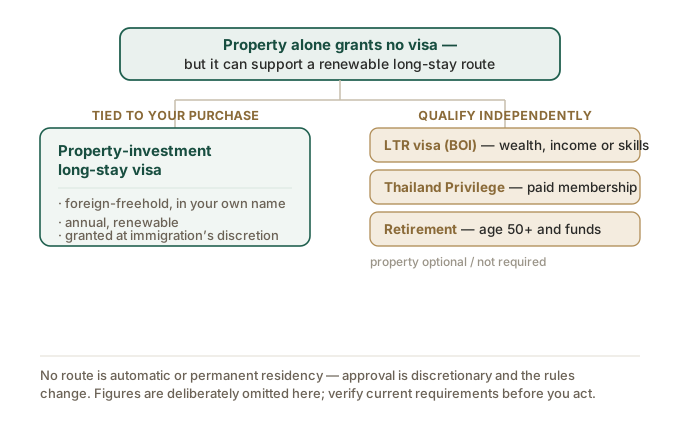
| Route | Property’s role | Indicative entry | Term | Note |
|---|---|---|---|---|
| Property-investment long-stay visa | Direct — qualifying real estate | from ~THB 3M, foreign-freehold | 1 yr, renewable | New 2026; discretionary |
| LTR (BOI) | Optional — can count within a wider wealth/investment test | set by BOI (income/assets) | up to 10 yr | Not property-specific |
| Thailand Privilege (Elite) | None — you pay a membership fee | membership fee, tiered | fixed term by tier | Unrelated to property |
| Retirement (Non-O / O-A) | None — age plus funds | age 50+, financial proof | 1 yr, renewable | Not property-based |
The route created for buyers is the property-investment long-stay visa — reported in 2026 as available to foreigners who buy qualifying Thai real estate from around THB 3 million held Freehold in their own name. It is issued one year at a time, renewable, and granted at immigration’s discretion; the purchase is necessary but not sufficient.
If your wealth or income is the stronger card, the LTR visa (run by the Board of Investment) gives up to ten years and can fold property into a broader investment figure, though it is not a property visa as such. The Thailand Privilege membership simply buys long-stay rights for a fee. The retirement visa and the DTV are common long-stay options too, but neither is based on owning property.
Matching a visa to your Phuket purchase
This is where the numbers meet reality. The property-investment route’s ~THB 3 million floor is about €77,000 (at roughly 39 THB to the euro). In Phuket that is around the entry price for a studio or small one-bedroom condo in some areas — so for most quality Phuket purchases the price threshold is cleared comfortably, and the binding constraints are the conditions, not the amount:
- The unit must be foreign-freehold and registered in your own name (within the building’s 49% foreign quota ) — a leasehold unit or one held through a company will not qualify for a property-based visa.
- Approval is discretionary and the visa is annual: you are not buying permanent status, you are buying eligibility to apply and renew.
- Never use a nominee structure to manufacture “ownership” for a visa — it is illegal, it is the target of the 2026 crackdown, and it puts both the asset and your immigration status at risk.
If you are buying mainly to invest rather than to relocate, weigh the visa as a secondary benefit, not the reason to buy — our investment guide works the actual returns, and our tax guide covers what you pay as an owner.
What these routes do not do
Set expectations honestly before you plan around a visa:
- No automatic residency or citizenship. A property-linked visa is a renewable long-stay permit, not permanent residency, and renewal is never guaranteed — each renewal is assessed afresh.
- No work rights by default. Long-stay does not equal the right to work; that depends on the specific visa and a separate permit.
- No protection from rule changes. New routes can be tightened, repriced or withdrawn; build in a fallback rather than betting your stay on one scheme.
Will you be a Thai tax resident?
If a long-stay visa means you spend 180 days or more in Thailand in a calendar year, you become a Thai tax resident. That does not change whether your Thai rental income is taxable (it always is, here), but it can affect how foreign income you bring in is treated. If you plan to live here much of the year, read the tax guide and take advice on timing money you remit.
Key terms
- Property-investment long-stay visa
- A visa route tied to buying qualifying Thai real estate (reported minimum THB 3 million, foreign-freehold). New as of 2026, issued one year at a time and renewable, and subject to discretionary immigration approval — it is not automatic and not permanent residency. Verify current rules with Thai immigration or a lawyer.
- LTR visa (Long-Term Resident)
- A 10-year renewable visa run by Thailand’s Board of Investment (BOI) for wealthy individuals, pensioners, remote workers and skilled professionals. Not property-specific — qualifying investments can include Thai property within a broader threshold. Eligibility and figures are set by BOI and change; confirm at the official BOI LTR site.
- Thailand Privilege (Elite)
- A paid membership (formerly “Thailand Elite”) granting a long-stay privilege visa for a fixed term, tiered by the membership fee. It buys time in the country, not residency, and is unrelated to owning property.
- DTV (Destination Thailand Visa)
- A multi-entry “workcation” visa for remote workers and soft-power activities — reported as valid up to around five years, with stays of up to roughly 180 days per entry (rules can change; verify current terms). It does not require or involve buying property.
- Freehold
- Outright ownership of a property with no time limit. Foreigners can own condominium units freehold within the building’s 49% quota, but cannot own land freehold.
FAQ
Does buying property in Thailand give you a visa?
Not automatically. Ownership alone grants no right to live in Thailand and is not permanent residency. It can support a renewable long-stay visa — notably the 2026 property-investment route for foreign-freehold purchases from about THB 3 million — but approval is discretionary and the visa is issued a year at a time.
How much property do you need to buy for a Thailand visa?
The property-investment long-stay route is reported in 2026 to require qualifying real estate from around THB 3 million (about €77,000), held foreign-freehold in your own name. Most quality Phuket condos clear that floor — but the figure and conditions change, so verify current rules before relying on them.
Is the LTR visa a property visa?
No. The LTR (Long-Term Resident) visa is a BOI programme for wealthy individuals, pensioners, remote workers and skilled professionals. Property can count within a wider investment or wealth test, but the visa is not based on a purchase the way the property-investment route is.
Can I get permanent residency by buying property in Thailand?
No. There is no property-for-PR or property-for-citizenship route. The visas a purchase can support are renewable long-stay permits, assessed at each renewal — not permanent status.
Does a leasehold condo qualify for a property visa?
A property-based visa expects a foreign-freehold unit registered in your own name. A leasehold unit, or one held through a company, generally will not qualify — and using a nominee to fake ownership is illegal. Confirm your specific case with an immigration lawyer.
Which visa can you get if you own property in Thailand?
Ownership alone grants no visa, but an owner may qualify for several renewable long-stay routes: the new (2026) property-investment visa for foreign-freehold real estate from about THB 3 million; the BOI’s LTR visa (up to 10 years, on wealth or income); the paid Thailand Privilege membership; the retirement visa (age 50+); and the DTV. Only the first is tied to your purchase — the others you qualify for independently. Rules change, so verify current requirements.
Can you live in Thailand year-round if you buy a condo?
Not automatically — a purchase grants no residence right. To stay long-term you need a suitable long-stay visa (for example the property-investment, LTR, Thailand Privilege or retirement route), each issued annually or for a fixed term and renewable, not permanent status. And staying 180 days or more in a calendar year makes you a Thai tax resident.
Sources & references
Planning to buy with a visa in mind?
Tell us your budget and whether you want to relocate or just invest, and we will reply within one business day with foreign-freehold listings that fit, and point you to a Thai immigration lawyer to confirm your visa route.